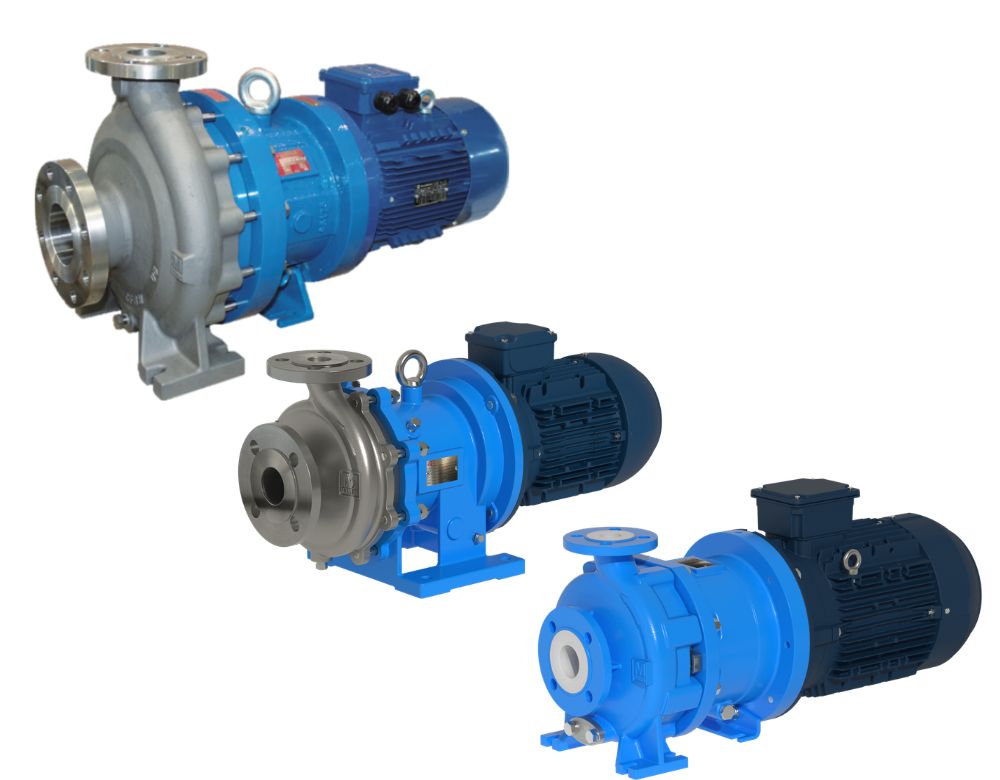
ISO & ANSI chemical process pumps
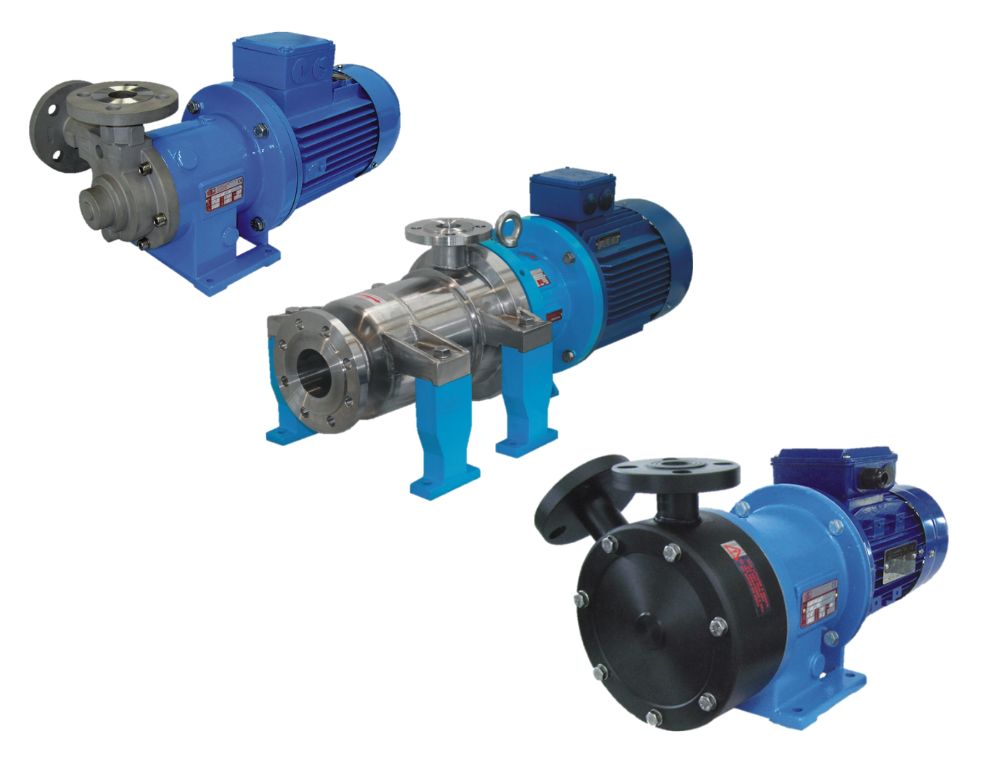
CN MAG-M, CL MAG-M and CI MAG-M, with ANSI versions, for chemical and general process duties.
CN MAG-M: up to 4,000 m³/h, 220 m head, −120°C to +350°C, PN25.

When a chemical can’t be allowed to leak, a mechanical seal is a risk you don’t need. M Pumps, a family-run Italian manufacturer with more than 40 years in pump manufacturing, builds magnetic drive pumps with no shaft seal at all. Fluid Prowess helps Malaysian plants select, supply and maintain them for acids, solvents and other hazardous liquids.
A standard centrifugal pump has a shaft running from the motor into the liquid, sealed by a mechanical seal. Seals wear, they’re sensitive to dry running and crystallising liquids, and when they fail the pumped liquid escapes.
With water, that’s a maintenance job. With hydrochloric acid, caustic soda, solvents or hydrocarbons, it’s a safety incident, an environmental report and a clean-up. Magnetic drive pumps take the shaft seal out of the design.
A magnetic drive (mag drive) pump is a centrifugal pump that transmits power from the motor to the impeller through a magnetic coupling instead of a shaft that passes through a seal.
An outer ring of magnets is mounted on the motor shaft, entirely outside the liquid.
A sealed containment shell sits between the outer magnets and the inner magnets. The magnetic field passes straight through it.
The inner magnet and impeller rotate together inside the liquid, supported on bearings lubricated by the pumped liquid.
The casing and shell form a closed space with only static seals, so there is no rotating seal for the liquid to escape through.
No mechanical seal means no seal leaks, no drips and no fugitive emissions from the drive end.
Corrosive, toxic and flammable chemicals stay inside the pump, protecting operators and the environment.
No seal faces to replace, no seal flushing plans and fewer spare parts to stock.
Metal pumps such as the CN MAG-M use CF8M stainless steel as standard, with Duplex, Incoloy 825, titanium and Alloy 20 options. Non-metallic PFA-coated pumps cover the most aggressive chemicals.
As a centrifugal pump, it delivers steady flow with no pulsation dampeners needed.
If the pump is overloaded, the magnetic coupling slips instead of transferring the shock to the motor.
There are many magnetic drive pump manufacturers. Every mag drive pump removes the shaft seal, so the difference between them lies in how the magnetic coupling is built. That is where M Pumps stands apart.
Many magnets on the market are glued in place and left exposed. Heat, humidity or chemical fumes can weaken the glue, and a loose magnet can damage the containment shell. M Pumps’ magnets are fully encapsulated and mechanically locked, so they stay sealed and secure for the life of the pump.
In a metal containment shell, the rotating magnets induce eddy currents, which waste power as heat. M Pumps’ hybrid containment shell cuts these magnetic losses by up to 75% compared with a standard Hastelloy shell.
Less energy lost in the shell means lower power consumption. In M Pumps’ own example, a 75 kW pump at 3,000 rpm loses 2.3 kW instead of 8.7 kW, saving around €5,600 a year in electricity at €0.10/kWh.
Lower losses also mean less heat passed into the pumped liquid, which matters most with volatile liquids that could otherwise vaporise inside the pump.
M Pumps’ example: a 75 kW pump running at 3,000 rpm
Both are centrifugal pumps with similar hydraulic performance. The difference is how the drive reaches the impeller.
| Factor | Magnetic drive pump | Centrifugal pump with mechanical seal |
|---|---|---|
| Shaft seal | None, liquid fully enclosed | Mechanical seal, a wear part |
| Leakage risk | Static seals only | Seal can weep or fail |
| Hazardous chemicals | Ideal | Often needs double seals and a flush system |
| Routine maintenance | Bearing and bushing checks | Seal replacement, flush system upkeep |
| Dry running | Not tolerated; use dry-run protection | Not tolerated; damages the seal |
| Solids and abrasives | Limited | Limited, wears the seal faces |
Canned motor pumps are the other main type of seal-less centrifugal pump. In a canned motor pump, the motor rotor and impeller sit on one shaft, and the rotor runs inside the pumped liquid, sealed from the motor windings by a thin metal “can”. Both designs remove the shaft seal, but they suit different situations.
| Factor | Magnetic drive pump | Canned motor pump |
|---|---|---|
| How it works | Standard motor drives the impeller through a magnetic coupling | Motor and pump built as one unit; the rotor runs in the pumped liquid |
| Motor | Standard IEC motor, easy to source and replace locally | Special integrated motor, usually repaired by the manufacturer |
| Liquid in the motor | No; the liquid stays inside the containment shell | Yes; the liquid flows through the motor to cool it and lubricate the bearings |
| Containment | Containment shell; double shell available on M Pumps | The can, with the stator housing as secondary containment |
| Footprint | Motor and pump side by side, or close-coupled | Very compact, no coupling to align |
| Overload | Magnetic coupling slips, protecting the motor | No coupling to slip |
| Standards | ISO 2858, ISO 15783, ANSI B73.3 and API 685 versions | Varies by manufacturer |
| Typical use | Chemical process, refinery and general industrial duties | Refrigerants, heat transfer fluids and duties where space is very tight |
M Pumps builds to API 610, API 685, ISO 5199, ISO 15783 and ANSI B73.3, so the pump can match your plant’s specification. The company works to ISO 9001 and ISO 14001.
CN MAG-M, CL MAG-M and CI MAG-M, with ANSI versions, for chemical and general process duties.
CN MAG-M: up to 4,000 m³/h, 220 m head, −120°C to +350°C, PN25.
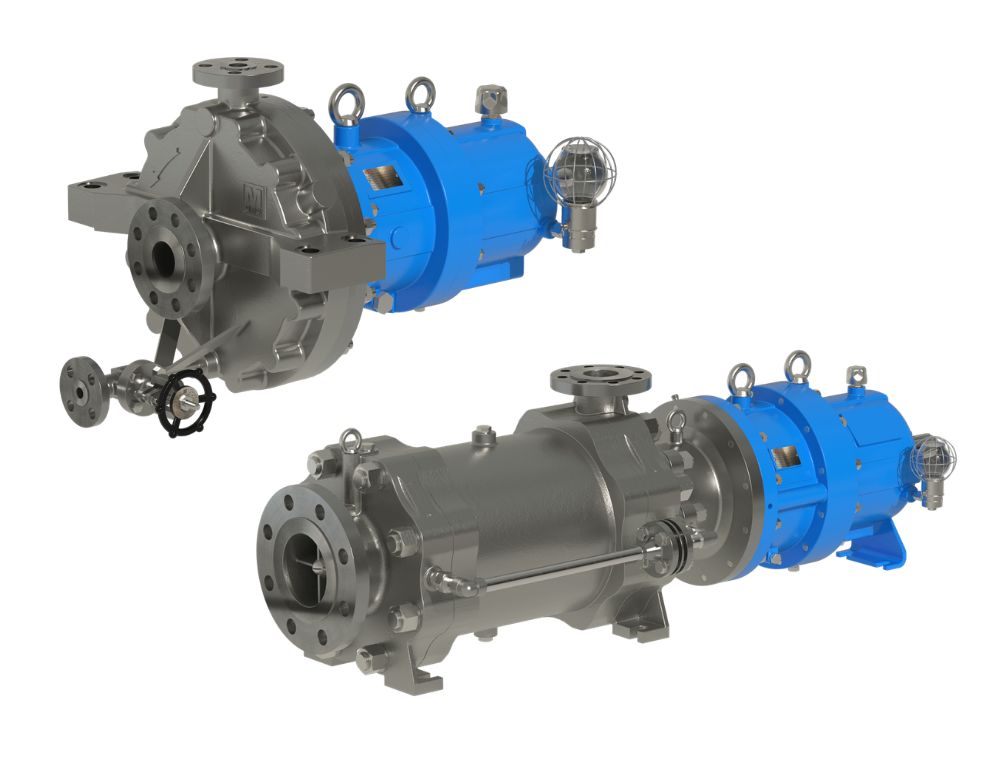
CN MAG-M API, CPE MAG-M API and CB MAG-MS for refinery, petrochemical and oil & gas service.
API 685 compliant.
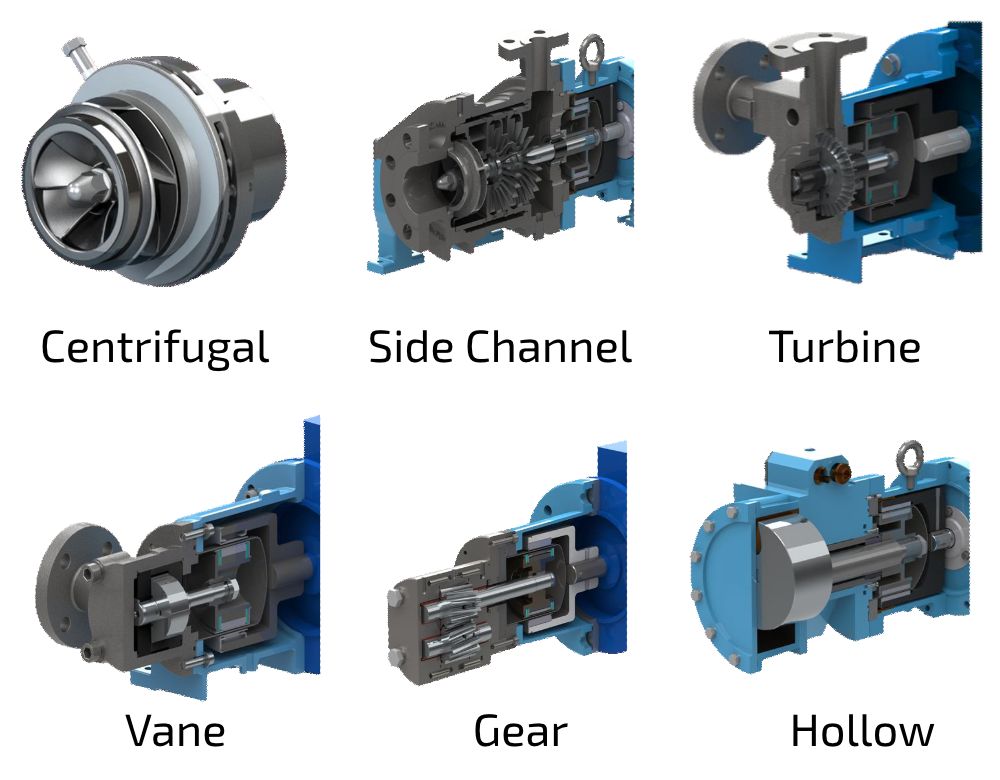
SCE MAG-M, SC MAG-M and the T MAG series for duties that need low flow at high head.
Single-stage and multistage versions.
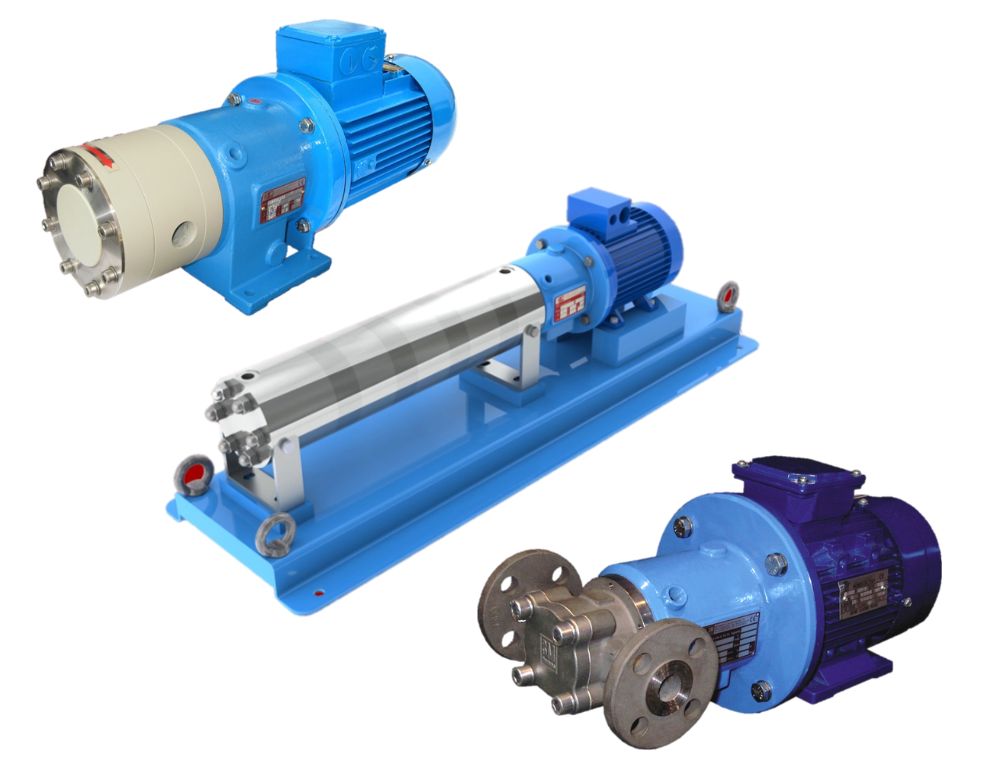
PFA-coated non-metallic pumps for highly corrosive chemicals, plus VP, V Modular and V In Line sliding vane mag drive pumps.
Sliding vane models are positive displacement.
Mag drive pumps belong wherever a leak would be dangerous, expensive or simply unacceptable.
Fluid Prowess is a one-stop pump solution provider in Malaysia. You deal with one local team from pump selection to spare parts and after-sales support.
A magnetic drive pump is a seal-less pump where the motor turns the impeller through a magnetic coupling. A sealed containment shell separates the liquid from the motor, so there is no shaft seal that can leak.
Generally no. The internal bearings are lubricated by the pumped liquid, so running dry can damage them quickly. Dry-run protection such as a power monitor is recommended wherever the supply could run out.
They are best for clean, thin liquids that must not leak, such as acids, alkalis, solvents, hydrocarbons and high-purity chemicals.
Not usually. Solids and abrasives wear the internal bearings and can block the gap around the rotor. For abrasive or particle-laden liquids, a seal-less diaphragm pump such as Wanner Hydra-Cell is often a better choice.
Both are seal-less pumps. A magnetic drive pump uses a standard motor that turns the impeller through a magnetic coupling, so the liquid never enters the motor and the motor is easy to replace. A canned motor pump builds the motor and pump into one sealed unit, with the pumped liquid flowing through the motor to cool it. Canned motor pumps are very compact, while mag drive pumps are easier to maintain with standard parts.
Fluid Prowess supplies M Pumps magnetic drive pumps and spare parts in Malaysia, with selection and technical support. Contact us with your liquid and duty.
Send us the liquid, concentration, temperature, flow rate and head. We’ll recommend the right M Pumps model and materials.