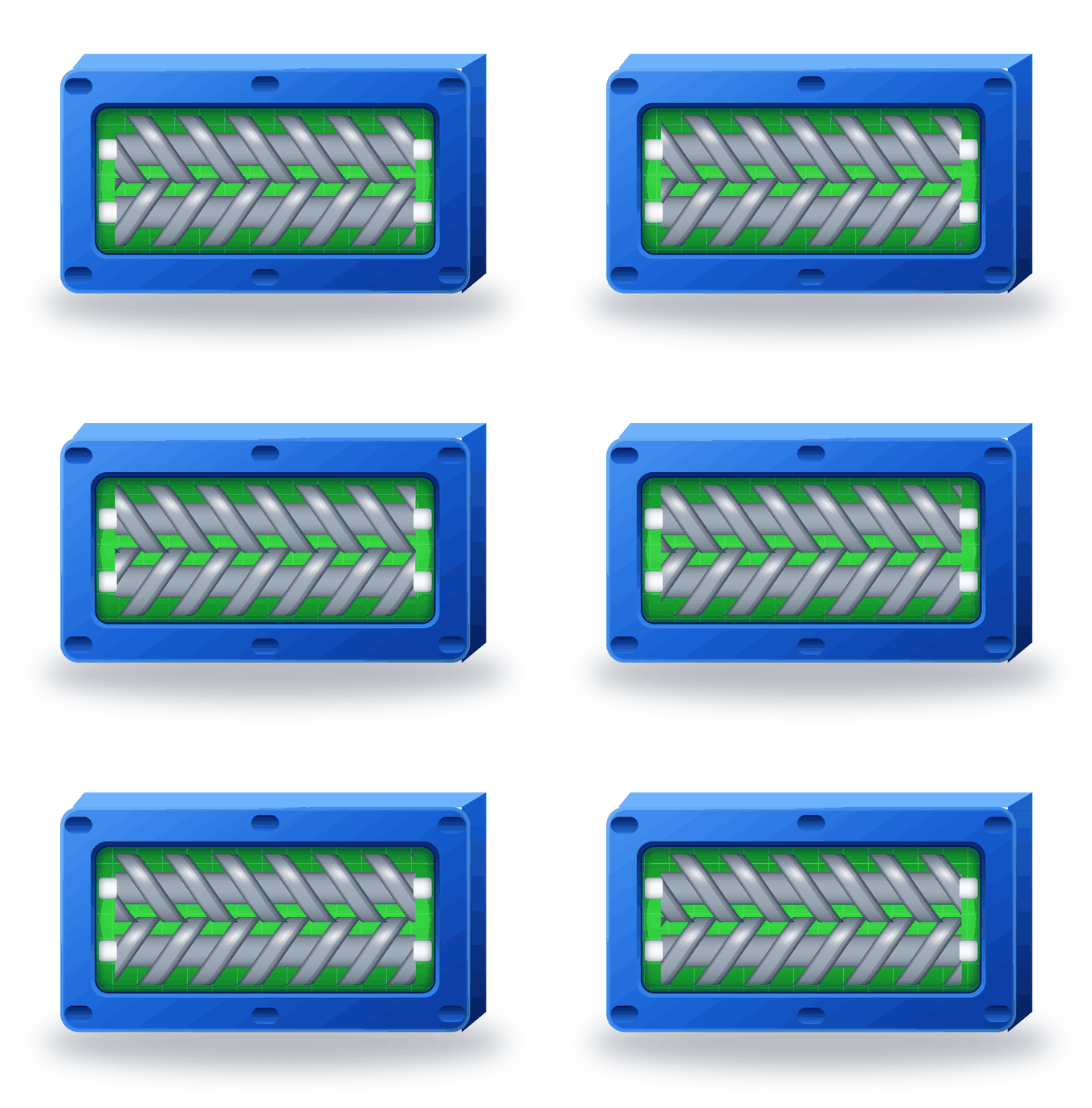
Twin screw pump
Two screws, kept apart by timing gears. For viscous liquids, bitumen, heavy fuel oil and multiphase crude.


Screw pumps move thick oils, fuels, bitumen and even oil-gas mixtures with smooth, steady flow. Fluid Prowess supplies Blackmer S Series twin and triple screw pumps, and helps plants across Malaysia pick the right model for each duty.
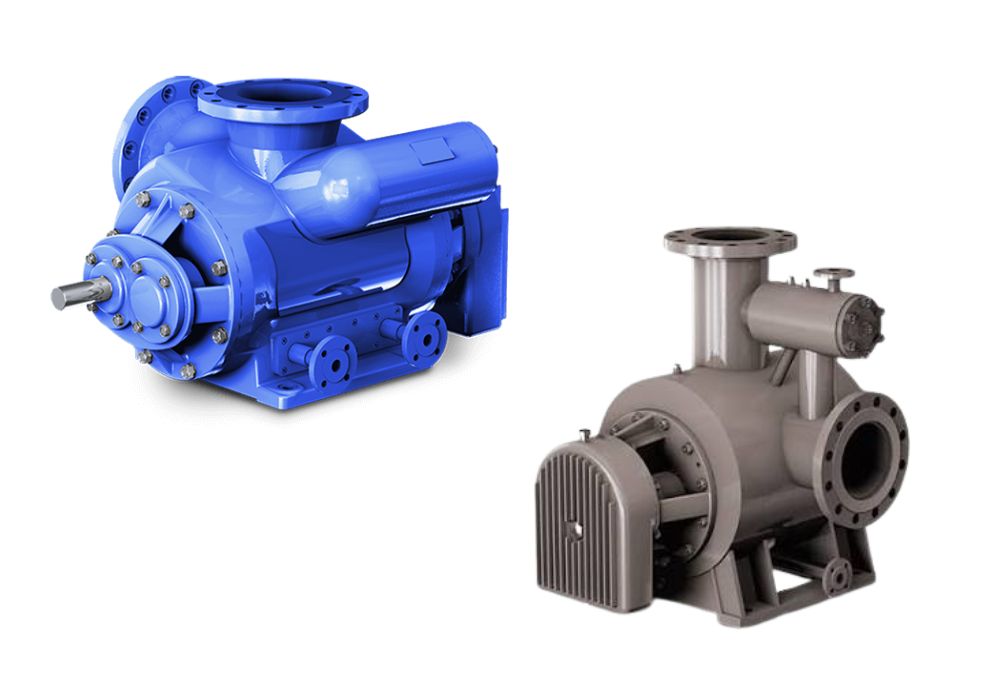
Centrifugal pumps struggle as liquids get thicker. Their efficiency drops, they churn the product and their flow changes with system pressure. A screw pump is a positive displacement pump, so it moves a set volume with every turn whether the liquid is as thin as diesel or as thick as bitumen.
Screw pumps are self-priming, run with very little pulsation or noise, and treat the liquid gently. That makes them a standard choice for fuel and lube oil systems, tank terminals, refineries, ships and oil fields.
A screw pump uses two or more screws (also called spindles) that intermesh inside a close-fitting casing.
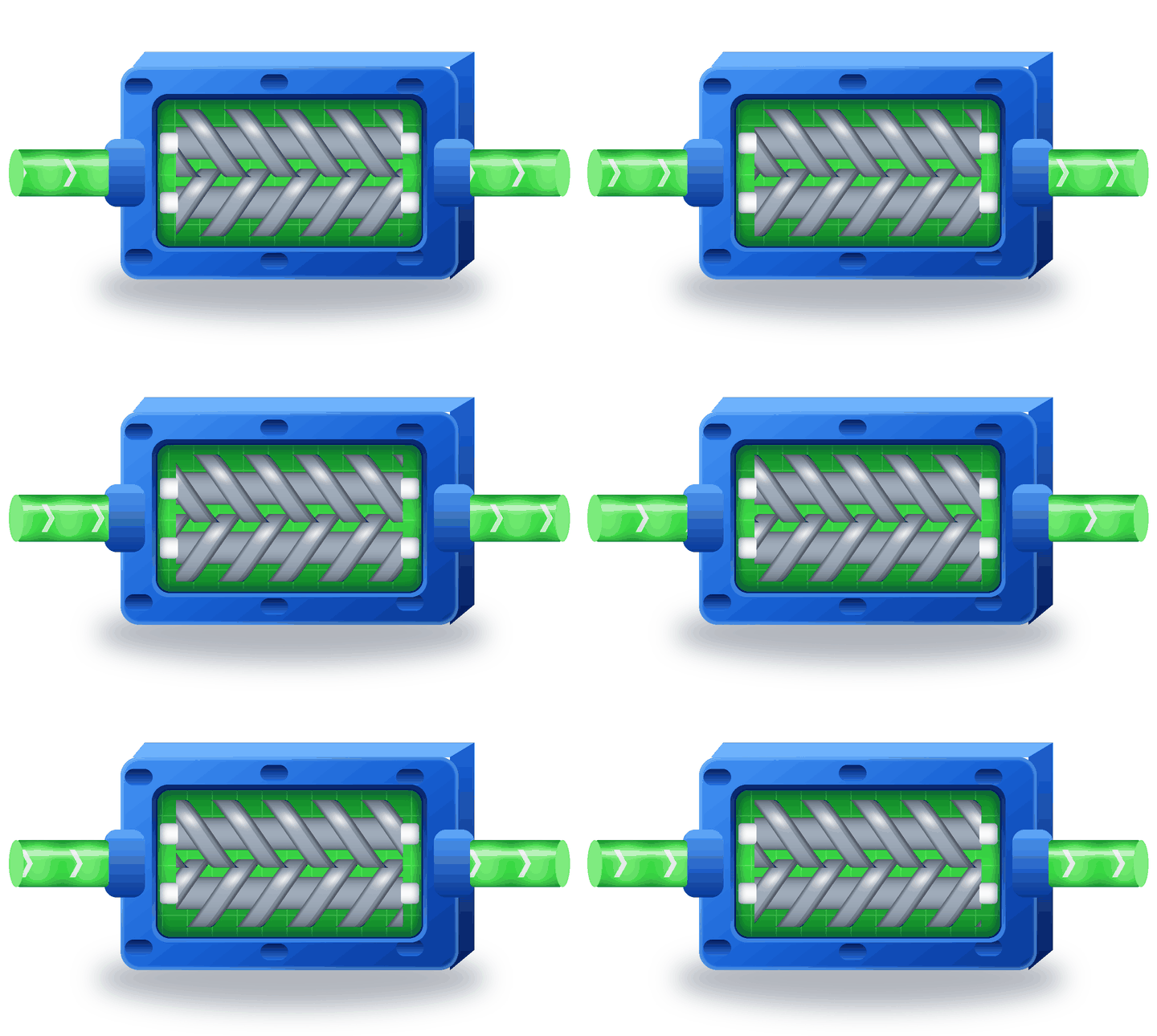
A motor drives one screw. In twin screw pumps, timing gears usually drive the second screw so the screws never touch.
The threads of the screws and the casing form a series of sealed chambers that fill with liquid at the inlet.
As the screws turn, the chambers travel along the screws, carrying the liquid smoothly towards the outlet.
Because the chambers move continuously, flow is nearly pulsation-free and stays in step with pump speed.
From thin fuels to heavy fuel oil and bitumen, with the right model and speed.
Continuous chambers mean very little pressure fluctuation, noise or vibration.
Low shear and little fluid agitation help protect products that can emulsify or degrade.
Screw pumps lift liquid from below the pump without needing a flooded suction.
Some designs tolerate entrained gas, and multiphase twin screw pumps move oil, water and gas mixtures together.
As positive displacement pumps, they give predictable flow that a VFD can control precisely.
Blackmer builds both. The number of screws decides which liquids and pressures a pump suits best.
Two screws, kept apart by timing gears. For viscous liquids, bitumen, heavy fuel oil and multiphase crude.
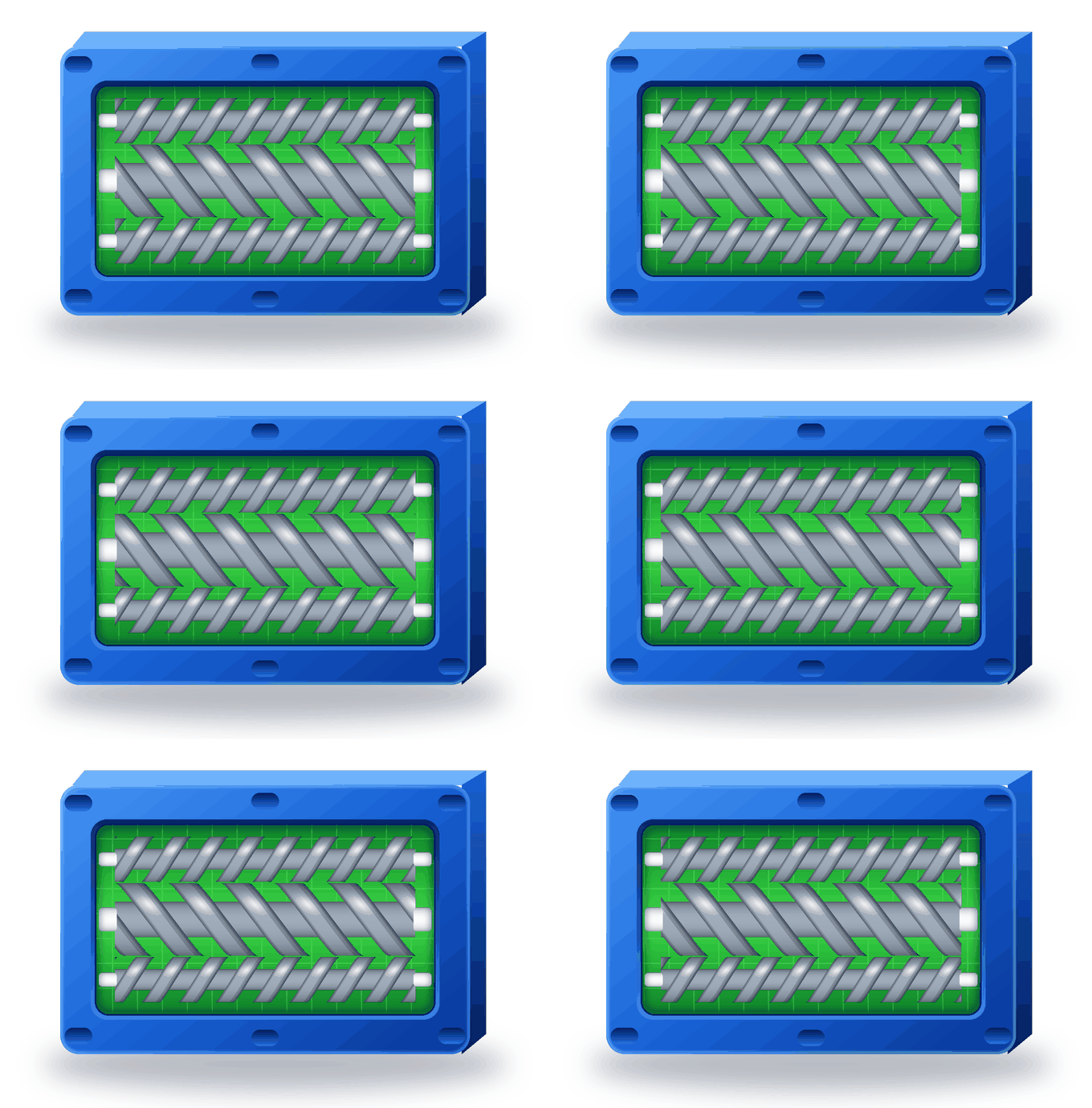
One drive screw turning two idler screws. For clean lubricating liquids at up to 100 bar.
| Factor | Twin screw pump | Triple screw (three-screw) pump |
|---|---|---|
| Best for | Viscous and low-abrasive liquids, bitumen, heavy fuel oil and multiphase crude | Clean lubricating liquids such as lube, hydraulic, fuel and diesel oil |
| Screw contact | Timing gears keep the screws apart (WTG models) | Drive screw turns the two idler screws |
| Solids | Liquids free of solids or with low abrasiveness | Liquid must be free of solids |
| Pressure | Up to 60 bar | Up to 100 bar |
| Flow | Up to 2,500 m³/h | 2 to 2,600 L/min |
| Blackmer models | S Series WTG, NTG and multi-phase | S Series 3N, 3M and 3PF |
Blackmer, part of PSG, a Dover company, builds S Series screw pumps for the chemical process, general industrial, energy, transport and commercial marine markets.
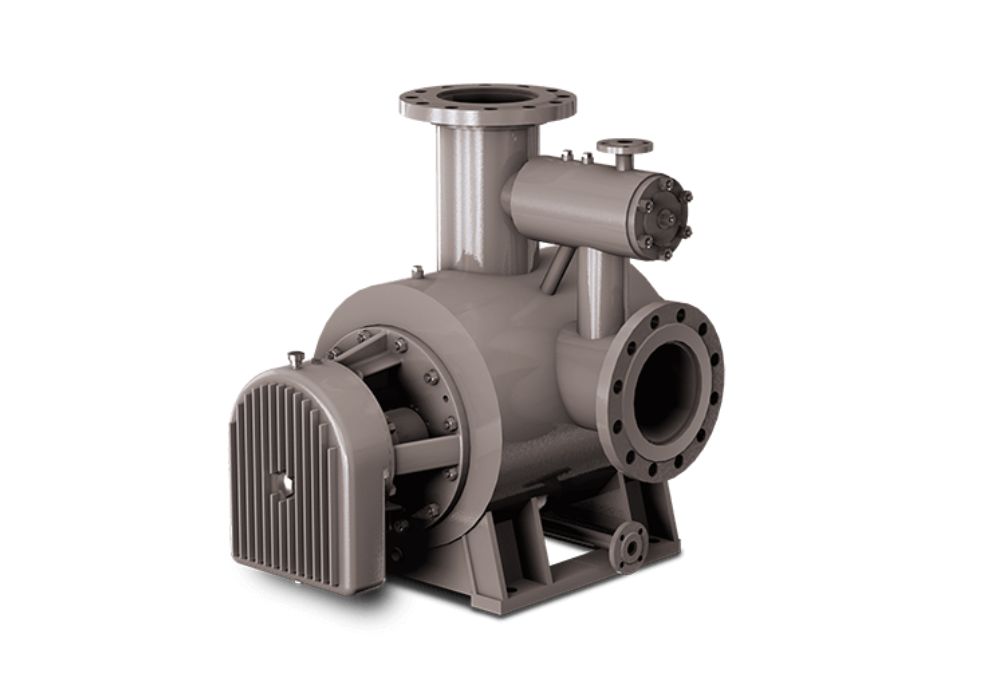
Self-priming twin screw pumps for viscous and low-abrasive liquids, up to 2,500 m³/h and 60 bar.
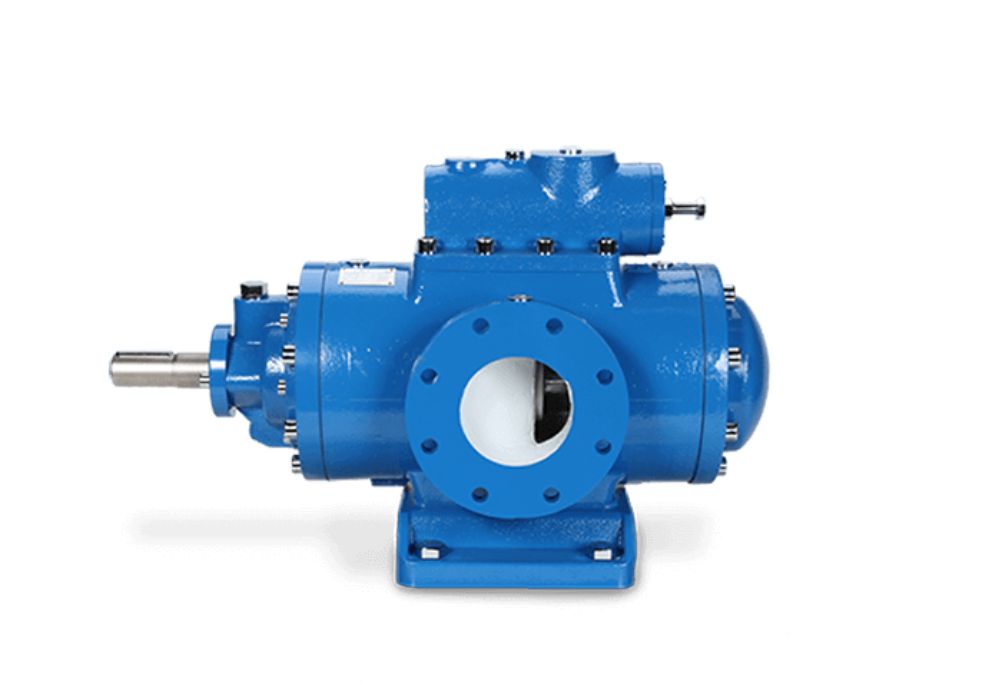
Self-priming three-screw pumps for clean lubricating liquids without solids, such as lube, hydraulic, fuel and diesel oil.
S Series twin screw pumps cover flows up to 2,500 m³/h and differential pressures up to 60 bar, with viscosities up to 100,000 cSt and temperatures up to 350°C. They come in horizontal, vertical, high-temperature, high-pressure and high-viscosity configurations.
Screw pumps handle the oils, fuels and heavy liquids found across Malaysia’s energy, marine and process industries.
The names are easy to mix up. A progressive cavity pump, also called a mono screw pump or single screw pump, uses one metal rotor turning inside a rubber stator. It is often chosen for sludges, pastes and shear-sensitive liquids carrying solids.
Twin and multi-screw pumps use two or more metal screws with no rubber stator. They suit higher temperatures, higher flows and pressures, and oils and fuels. If you aren’t sure which type your duty needs, send us the details and we’ll advise.
Fluid Prowess is a one-stop pump solution provider in Malaysia. With Blackmer’s twin, multi-phase and triple screw ranges, we can match the right design to your liquid instead of forcing one product to fit.
A screw pump is a positive displacement pump that uses two or more intermeshing screws turning inside a close-fitting casing. The screws form sealed chambers that carry the liquid smoothly from suction to discharge, giving steady, low-pulsation flow.
Twin screw pumps handle viscous and low-abrasive liquids, including bitumen and heavy fuel oil, and multiphase twin screw pumps handle untreated crude. Three-screw pumps are designed for clean, lubricating liquids such as lube oil, hydraulic oil and fuel oil, and reach higher pressures: Blackmer triple screw pumps go up to 100 bar, compared with 60 bar for its twin screw pumps.
No. A progressive cavity pump, also called a mono screw or single screw pump, uses one metal rotor turning inside a rubber stator. Twin and multi-screw pumps use two or more metal screws and suit higher temperatures, higher flows and oils and fuels. Progressive cavity pumps are often chosen for sludges and shear-sensitive liquids with solids.
Some screw pumps can run dry for short periods. Blackmer S Series pumps are rated for short dry runs, but extended dry running should be avoided.
Fluid Prowess supplies Blackmer screw pumps in Malaysia, with pump selection, spare parts and technical support. Contact us with your duty or existing pump details.
Share your liquid, viscosity, temperature, flow rate and pressure. We’ll recommend the right Blackmer screw pump, or another pump type if it suits you better.